The Dutch app scene: communities, meetups and how it grew
How the Netherlands built a friendly app community, from CocoaHeadsNL and Appsterdam to platform meetups beyond Amsterdam, and where a newcomer should start.
 Leila Haddad · · 8 min read
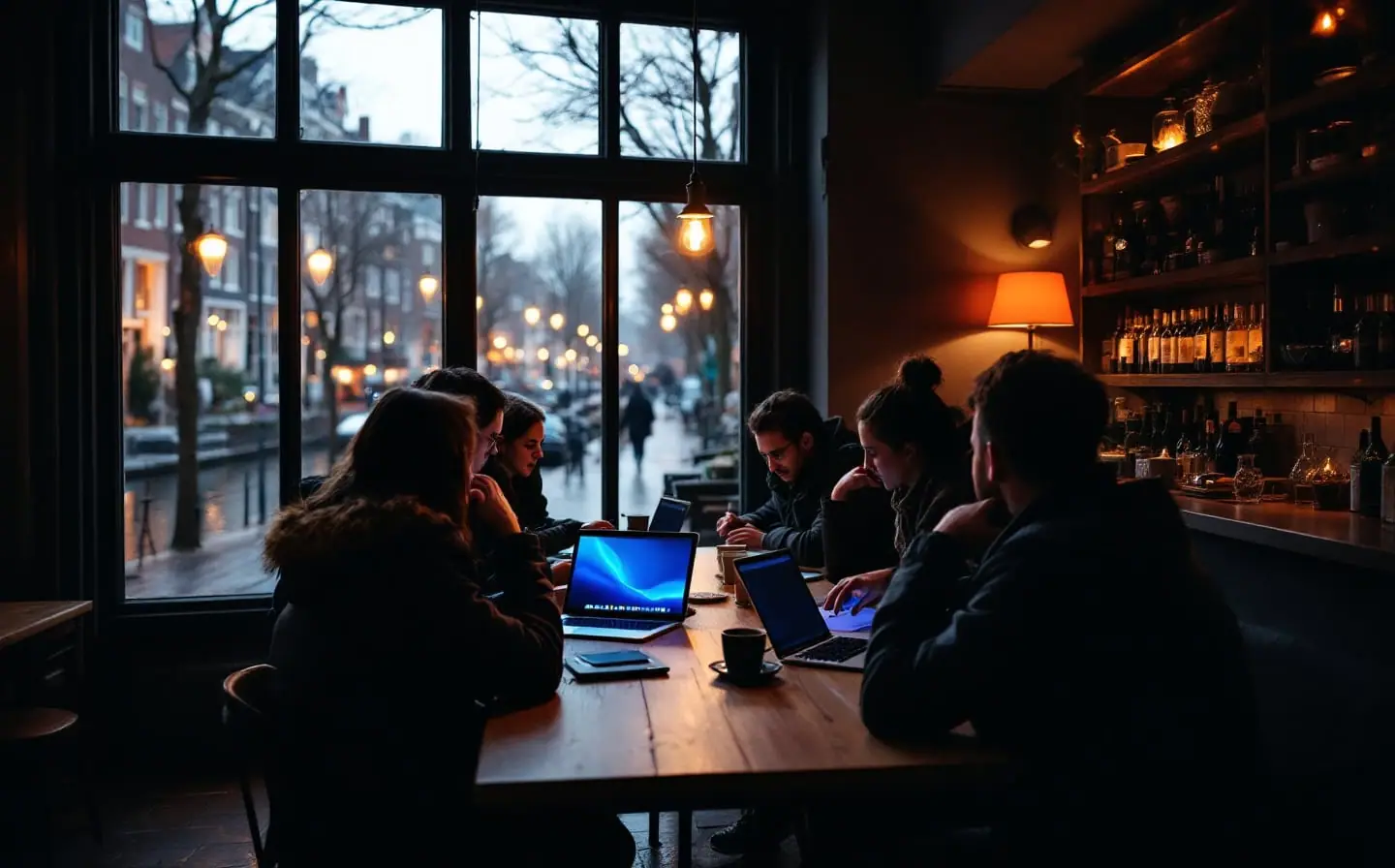
On Wednesday evenings, a café in Amsterdam-West fills up with people who make apps. There is no stage, no slides and no agenda. The weekly gathering is called Meeten en Drinken, a pun on the Dutch for eating and drinking, and its listing says plainly that no talks are ever scheduled. People arrive late, order a beer, compare notes on a crash nobody can reproduce, and go home. It has run in more or less this form for over a decade.
That evening is a good way into the Dutch app scene, because it captures what makes the scene distinct. It is informal, practical, mostly volunteer-run, and happier in a café or an office kitchen than in a convention center. I live and report in Amsterdam, and the question visitors ask me most is where to find "the community". The honest answer is that there are several, they overlap, and most of them are easier to join than people expect.
An older scene than people assume
The Dutch app community did not begin with the startup boom. CocoaHeadsNL, the Dutch chapter of the international CocoaHeads network for Apple platform developers, has organized meetups since December 2008. The format has stayed close to its roots: a monthly evening for iOS and Mac developers, held at a different host company each time, with food and drinks paid for by sponsors and talks on anything to do with Apple platforms, Cocoa, Objective-C and Swift. The meetings move between cities, including Amsterdam and Rotterdam.
The group runs as a non-profit funded mainly by sponsors, and it films and publishes its talks, so the CocoaHeadsNL site is useful even when you can't attend. Its volunteers have also organized an iOS conference, Do iOS, in several years. For a developer who has just moved to the country, a CocoaHeadsNL evening is one of the simplest ways to meet colleagues outside their own company.
Appsterdam and the idea of a city for app makers
In 2011, a group of developers set out to make Amsterdam a home base for app makers from around the world. The initiative was called Appsterdam, and its best-known advocate was the app developer Mike Lee, who carried the title "Mayor of Appsterdam". The pitch, as reported around its launch weekend in June 2011, was that app makers everywhere were looking for somewhere to settle, and that Amsterdam was cheaper and easier to move to than Silicon Valley. Early support came from the Amsterdam software company Sofa, which Facebook acquired around the same time, from the University of Amsterdam and from the city government.
The ethos was cooperation rather than competition: developers sharing solutions to the problems that didn't set their products apart. Coverage at the time also pointed to practical matters, such as the Dutch-American Friendship Treaty, which lets Americans obtain a renewable residence permit to start a business in the Netherlands, and the right of EU citizens to work here without restriction.
What Appsterdam built was mostly infrastructure for meeting people. It described itself as a volunteer-run, non-profit community offering weekly lectures, weekly bar meetups, peer support and tech events. The Wednesday lunchtime lectures mixed visiting speakers with local app makers and covered technical and non-technical subjects alike, from languages and testing to design, marketing and business. Saturday morning Coffee Coding sessions offered peer help with whatever you were stuck on. And Meeten en Drinken gave everyone a fixed place to show up each week without registering.
The weekly café evening is the part most people know today. Its listings now appear under the local Google Developer Group, GDG Amsterdam, which describes the café as the place where Appsterdam was born. The lasting idea was a low threshold. You could arrive in the city on a Monday and be in a room full of app developers by Wednesday.
The city and the state step in
Through the 2010s, support for startups became official policy. The City of Amsterdam launched StartupAmsterdam in 2015 to strengthen and promote the city's startup and innovation ecosystem, working with investors, mentors, coworking spaces and international networks. Nationally, the government's StartupDelta initiative, led at first by former European commissioner Neelie Kroes, set out to strengthen the international position of Dutch startups and to attract founders from abroad. In 2019 it was renamed Techleap.nl, led by Prince Constantijn.
Immigration rules moved too. Since January 1, 2015, founders from outside the EU have been able to apply for a one-year residence permit to launch an innovative business, on the condition that an experienced facilitator based in the Netherlands guides them.
For app makers, the effect was indirect but real. More founders meant more funded companies needing mobile teams, and more offices with a spare room and a fridge for an evening meetup. Large employers headquartered in Amsterdam, among them Booking.com and the payments company Adyen, also keep a large pool of experienced engineers in the city. If you follow the business side, our startups and business track covers funding, pricing and costs in more depth.
The platform meetups
Most technical meetups are organized around a platform. A rough map:
| Community | Focus | Where | Format |
|---|---|---|---|
| CocoaHeadsNL | iOS, macOS and other Apple platforms | Rotating hosts, including Amsterdam and Rotterdam | Monthly evening with talks, food and drinks |
| Dutch Android User Group | Android | Varies by meetup | Monthly talks, open discussions, demos and workshops |
| Dutch Kotlin User Group | Kotlin | First public meetup in Utrecht, April 2022 | Company-hosted evenings with talks |
| Flutter Hollands | Flutter | West and south, including Amsterdam, Utrecht, Zaandam and Eindhoven | Talks, workshops, lightning talks, coding evenings |
| Flutter Twente | Flutter | East of the country | Part of the wider Flutter Netherlands community |
| GDG Amsterdam | Google developer technologies | Amsterdam | The weekly Meeten en Drinken café evening |
The Android and Kotlin crowds overlap heavily, and plenty of developers go to two or three of these groups depending on what they are working on. The Dutch Android User Group describes its meetups as fun and technical, in an informal setting, which matches the general tone. Flutter Hollands and Flutter Twente split the country between them and share a Slack workspace and social channels as Flutter Netherlands.
Most of the meetups I go to run in English, because a large share of the people in the room moved here from elsewhere. Nobody minds if you switch to Dutch at the bar afterward.
Beyond Amsterdam
The Netherlands is small enough that "local" usually means "a train ride away". Rotterdam is a regular stop for meetups that rotate between host companies, CocoaHeadsNL among them. Utrecht's central position makes it a natural meeting point for groups that draw people from all over the country, which is one reason the Dutch Kotlin User Group held its first public meetup there and Flutter Hollands meets there too.
Eindhoven has a different flavor. Philips was founded there, and the region now promotes itself as Brainport, with a strong base in high-tech hardware and embedded software. For mobile developers, that makes companion apps for devices an obvious line of work. Further east, Flutter Twente serves developers in that part of the country.
The Dutch way of running an event
Dutch tech events share a few habits. They start on time. Doors usually open with simple food, the host company says a few words (often including that it is hiring), and then come one or two talks by working developers rather than keynote names. Questions are direct, sometimes bluntly so, and most speakers take that in good spirit. The evening ends with a borrel, the Dutch word for informal drinks, which is where most of the useful conversations happen.
The economics are simple. The host provides a room, dinner and a reason for its developers to stay late; everyone else gets a free evening of learning and a chance to meet peers. That model keeps meetups free or close to it, and it explains why so many groups run on volunteers and a sponsor list rather than admission charges. Much of the advice for getting value from a tech conference applies at meetup scale too, with lower stakes and a shorter trip home.
Where to start
- Choose one platform group and go three times in a row. On the first evening you are a stranger; by the third, people remember your name and what you are building.
- Try a no-talk evening such as the Wednesday café meetup. Bring a question rather than a pitch.
- Find groups on Meetup and on the Google Developer Groups community site, and join the Slack workspaces many of them run. CocoaHeadsNL and Flutter Netherlands both have one.
- RSVP honestly, and cancel when you can't come. Hosts order food by headcount.
- Offer a lightning talk once you have been a few times. Volunteer organizers need speakers, and five minutes on a real problem you solved is always welcome.
- Take the train. Utrecht, Rotterdam and Eindhoven are easy trips from Amsterdam, and smaller rooms make conversation easier.
- If you are founding a company, read the StartupAmsterdam pages first. If you are coming from outside the EU, check the startup residence scheme and its facilitator requirement before you book a flight.
- If you need to hire a studio, ask around at meetups for honest experiences, then use our guide to choosing an app agency or studio to structure the decision.
You will find more meetups, conferences and community stories in our events and scene coverage. But the simplest first step is still the oldest one. Pick a Wednesday, find the café, and ask the person next to you what they are building. That one question is most of the onboarding the Dutch app scene has ever needed.
Keep reading

App monetization models compared: subscriptions, one-time and ads
Subscriptions, one-time purchases, freemium, ads and hybrids compared, with store commission basics, free trials and price localization for small app teams.

What an app really costs to build, line by line
A freelance iOS developer walks through an app budget line by line, from discovery and design to backend, testing, launch and the yearly cost of upkeep.

Getting real value from a tech conference: a practical checklist
Pick the right kind of conference, set two goals, use the hallway, keep notes that survive the trip home and share them so the next budget request is easy.